

Are modular container buildings suitable for remote locations?
Dec 02, 2025
Leave a message
As a supplier of Modular Container Buildings, I've witnessed firsthand the growing interest in these structures, especially in remote locations. The question of their suitability for such areas is not only relevant but also crucial for those looking to build in off - the - grid places. In this blog, I'll explore the various aspects that make modular container buildings a viable option for remote locations.
Advantages of Modular Container Buildings in Remote Areas
Ease of Transportation
One of the most significant advantages of modular container buildings is their ease of transportation. These buildings are pre - fabricated in a factory and then transported to the construction site. In remote locations, where traditional building materials may be difficult to access due to poor road conditions or long distances, container modules can be easily transported using standard shipping containers. They can be loaded onto trucks, trains, or even ships, depending on the location. For example, in a remote mining site in the Australian outback, modular container buildings can be shipped by sea to the nearest port and then transported by truck to the site. This reduces the time and cost associated with transporting building materials.
Quick Installation
Time is of the essence, especially in remote locations where delays can be costly. Modular container buildings can be installed much faster than traditional buildings. Since the majority of the construction work is done in the factory, the on - site installation process is relatively simple. All that is required is to assemble the pre - fabricated modules on a prepared foundation. This means that a modular container building can be up and running in a matter of days or weeks, compared to months or even years for a traditional building. For instance, a Modern Design Modular Container House can be installed quickly, providing immediate shelter or workspace in a remote area.
Cost - Effectiveness
Building in remote locations can be expensive due to the high cost of transporting materials and labor. Modular container buildings offer a cost - effective alternative. The pre - fabrication process in a factory allows for better cost control, as materials can be purchased in bulk and labor can be more efficiently managed. Additionally, the reduced installation time means lower labor costs on - site. Over the long term, the energy - efficient design of many modular container buildings can also result in lower operating costs. For example, a 3bedroom Prefab Modular Steel Container House can be a more affordable option for housing in a remote community compared to a traditional brick - and - mortar house.
Durability
Remote locations often face harsh environmental conditions, such as extreme temperatures, strong winds, and heavy rainfall. Modular container buildings are built to withstand these conditions. They are typically made of steel, which is strong and resistant to corrosion. The modular design also allows for easy reinforcement and modification to meet specific environmental requirements. For example, in a coastal remote area prone to hurricanes, the container modules can be reinforced to withstand high - speed winds.
Flexibility
Modular container buildings offer a high degree of flexibility. They can be easily customized to meet the specific needs of the project. Whether it's a small single - room structure or a large multi - story building, modular container buildings can be designed and configured accordingly. They can also be easily expanded or re - configured in the future. For example, a research station in a remote Arctic location may start as a small building but can be expanded as the research project grows.
Challenges and Solutions
Foundation Requirements
In remote locations, preparing a suitable foundation can be a challenge. The ground conditions may be uneven, rocky, or unstable. However, modular container buildings can be designed to work with different types of foundations. For example, a lightweight foundation system can be used for areas with soft soil, while a more robust foundation may be required for rocky terrain. Engineers can conduct a site survey to determine the most appropriate foundation type for the location.
Utility Connections
Access to utilities such as water, electricity, and sewage can be limited in remote locations. However, modular container buildings can be designed to be self - sufficient or to connect to alternative utility sources. For example, solar panels can be installed on the roof to provide electricity, and rainwater harvesting systems can be used for water supply. Additionally, advanced sewage treatment systems can be incorporated into the building design to handle waste disposal.
Maintenance
Regular maintenance is essential to ensure the longevity of modular container buildings, especially in remote locations. However, the modular design makes maintenance easier. Individual modules can be easily accessed and replaced if necessary. Suppliers can also provide maintenance training and support to the users in remote areas.
Case Studies
Remote Research Station
A research station in the Amazon rainforest was built using modular container buildings. The ease of transportation allowed the modules to be shipped up the river to the site. The quick installation meant that the researchers could start their work soon after arrival. The durability of the steel containers protected the building from the humid and rainy climate. The modular design also allowed for future expansion as the research project evolved.
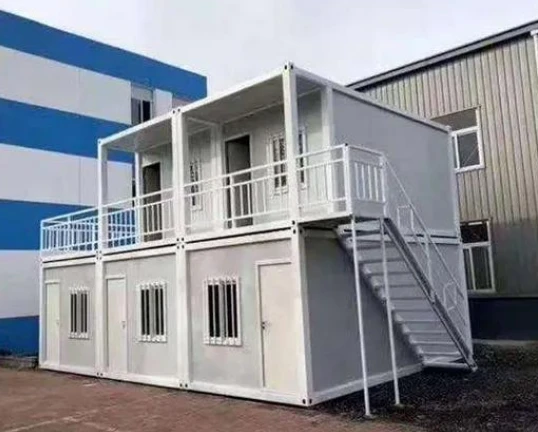

Mining Camp
In a remote mining area in Canada, a mining camp was constructed using modular container buildings. The cost - effectiveness of the buildings made it possible to provide comfortable accommodation for the miners within a tight budget. The flexibility of the design allowed for the addition of new modules as the mining operation expanded.
Conclusion
In conclusion, modular container buildings are highly suitable for remote locations. Their advantages in terms of transportation, installation, cost, durability, and flexibility outweigh the challenges. With proper planning and design, these buildings can overcome the difficulties associated with foundation requirements, utility connections, and maintenance. As a supplier of Modular Container Buildings, I am confident that these structures can meet the needs of various projects in remote areas.
If you are considering a building project in a remote location, I encourage you to explore the possibilities of modular container buildings. Our team of experts can work with you to design and build a solution that meets your specific requirements. Contact us to start a conversation about your project and discover how modular container buildings can be the perfect fit for your remote location.
References
- "Modular Construction: A Sustainable Solution for Remote Areas" - Journal of Sustainable Building Practices
- "Container Architecture: Design and Applications in Remote Locations" - Architectural Review
- "Advantages of Modular Buildings in Challenging Environments" - Construction Technology Magazine